|
|
| |
|
|
| |
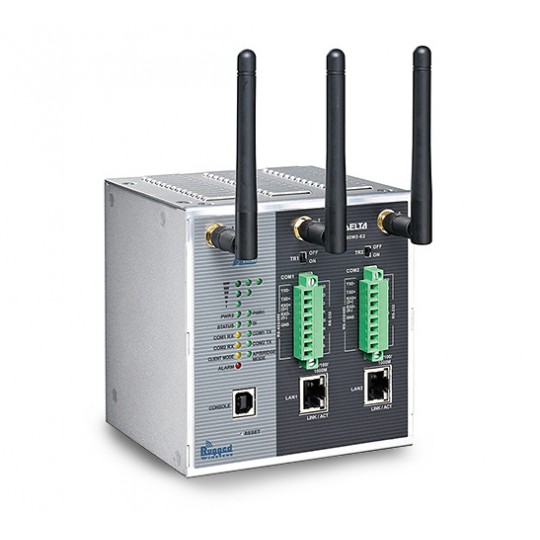
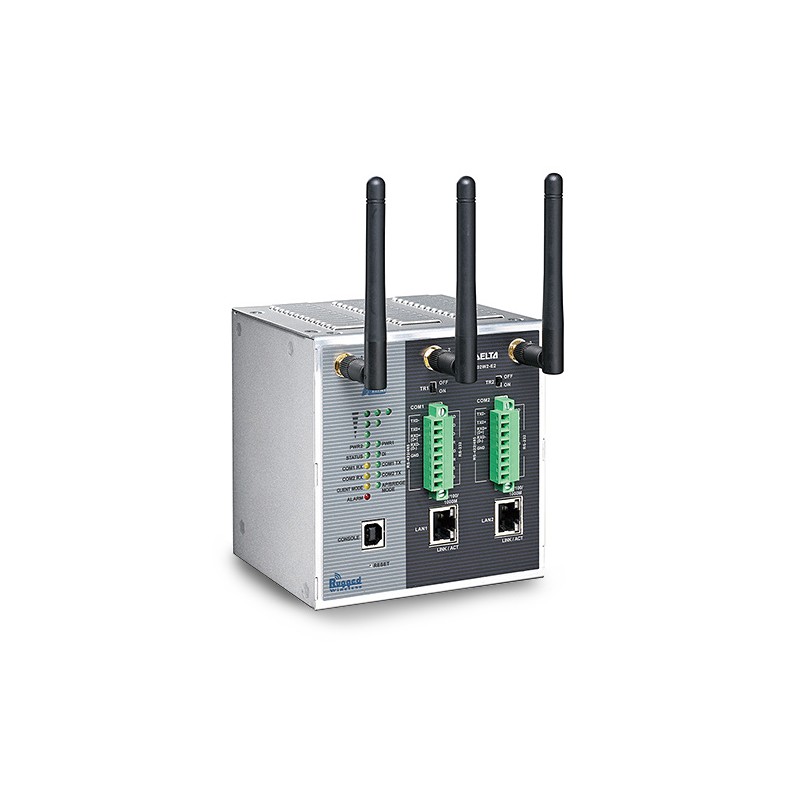
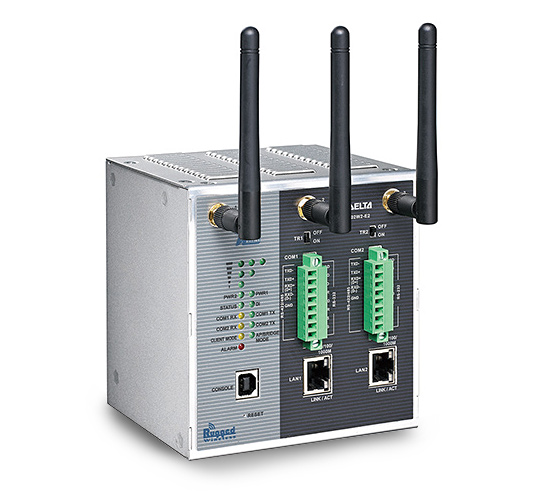
Adopting MIMO technology, and support multiple wireless operating mode. 3-in-1 serial ports, enhanced wireless security, WMM and a wide-operating temperature from -40℃ to 75℃ help constructing a reliable industrial wireless network.
 |
|
| |
|
|
| |
Features & Benefits
|
| |
 |
Compliant with IEEE 802.11n wireless technology capable of up to 450Mbps data rate |
|
Backward compatible with 802.11 a/b/g standard for seamless integration |
|
Multiple Wireless Modes: AP, Client CPE, WDS P-T-P, WDS P-T-MP, Repeater |
|
3×3 MIMO technology increases data rate |
|
Wireless QoS(IEEE 802.11e, WMM) for video packets precedence transmission |
|
Enhanced wireless security: 64/128-bit WEP, WPA / WPA2, WPA-PSK / WPA2-PSK (TKIP/AES) and 802.1X Authentication |
|
Supports 2-port RS-232/422/485-to-Ethernet Device Server |
|
Up to 16 simultaneous connections allows multiple hosts collection |
|
Built-in 2-port MODBUS ASCII/RTU to MODBUS TCP Gateway |
|
Up to 32 TCP masters or 32 TCP slaves per port at the same time |
|
Built-in 20MB buffer memory to avoids data loss once the connection is down |
|
SNTP (simple network time protocol) for network clock synchronization |
|
Broadcast/Multicast/Unknown Unicast storm control improves throughput problems |
|
USB console interface for easy connection with laptops |
|
Supports MODBUS TCP protocol for facilitating the remote management by SCADA or with other industrial devices |
|
CPU utilization displays the amount of works the CPU handles |
|
Auto warning by email, DI, Relay, Syslog & SNMP trap |
|
|
|
|
|
|
| |
|
|
| |
|
|
| |
| |
Technology |
| |
|
|
IEEE 802.11 a/b/g/n Wireless LAN |
|
|
|
IEEE 802.11i Wireless Security |
|
|
|
IEEE 802.11e QoS(WMM) |
|
|
|
IEEE 802.3 10Base-T |
|
|
|
IEEE 802.3u 100Base-T(X) |
|
|
|
IEEE 802.3ab 1000Base-T |
|
|
|
IEEE 802.3x Flow Control |
|
|
|
IEEE 802.1D Spanning Tree Protocol |
|
|
|
IEEE 802.1w Rapid Spanning Tree Protocol |
|
|
|
IEEE 802.1Q VLAN Tagging |
|
|
|
IEEE 802.1X Port Authentication |
|
|
| |
Interface |
| |
|
|
IEEE 802.11 a/b/g/n: 3T3R |
|
|
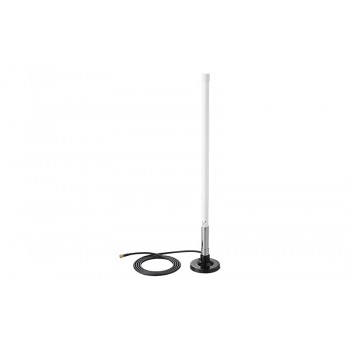
| Antennas: 3 2dBi omni-directional, RP-SMA(male) connector |
|
|
|
RJ45 Ports: 2 10/100/1000Base-T, auto MDI/MDI-X, auto negotiation |
|
|
|
Serial Ports : 2 RS-232/422/485, Terminal Block(8 contacts per port), 2KV isolation protection |
|
|
|
Baud Rate: 110bps to 921.6kbps |
|
|
|
Data Bits: 7, 8 |
|
|
|
Parity: None, Even, Odd, Space, Mark |
|
|
|
Stop Bits: 1, 2 |
|
|
|
Flow Control: RTS/CTS ( RS-232 only ), DTR/DSR, XON/XOFF |
|
|
|
RS-232: TxD, RxD, RTS, CTS, DTR, DSR, DCD, GND |
|
|
|
RS-422: Tx+, Tx-, Rx+, Rx-, GND |
|
|
|
RS-485( 2-wire ) : D+, D-, GND |
|
|
|
RS-485( 4-wire ) : Tx+, Tx-, Rx+, Rx-, GND |
|
|
| Console Port : USB B-Type connector |
|
|
|
1 set |
|
|
|
0~+5V is OFF |
|
|
|
+11V~30V is ON |
|
|
|
Max. input current 6mA |
|
|
|
1 relay output |
|
|
|
Carry current 5 A@24VDC |
|
|
| Terminal Resistor Switches: 2 sets, 120KΩ |
|
|
| |
Wireless RF |
| |
|
|
802.11a |
|
|
|
BPSK, QPSK, 16QAM, 64QAM with OFDM |
|
|
|
802.11b |
|
|
|
DBPSK, DQPSK with DSSS, CCK |
|
|
|
802.11g |
|
|
|
BPSK, QPSK, 16QAM, 64QAM with OFDM |
|
|
|
802.11n |
|
|
|
BPSK, QPSK, 16QAM, 64QAM with MIMO-OFDM |
|
|
| Frequency Band: 2.400GHz ~ 5.850GHz |
|
|
|
2.412GHz ~ 2.462GHz (11 channels) |
|
|
|
5.180GHz ~ 5.240GHz (4 channels), 5.745GHz ~ 5.825GHz (5 channels) |
|
|
|
2.412GHz ~ 2.472GHz (13 channels) |
|
|
|
5.180GHz ~ 5.240GHz (4 channels) |
|
|
|
2.412GHz ~ 2.472GHz (13 channels) |
|
|
|
5.725GHz ~ 5.850GHz (5 channels) |
|
|
|
2.412GHz ~ 2.462GHz (11 channels) |
|
|
|
5.280GHz ~ 5.320GHz (3 channels), 5.745GHz ~ 5.825GHz(5 channels) |
|
|
| |
Management |
| |
|
| STP/RSTP, QoS, VLAN, SSH, DNS, HTTP, HTTPS, RADIUS, TACACS+, SNMP v1/v2c/v3, SNMP Traps, TFTP, BootP Server/Client, DHCP Server/Client, Telnet, Syslog, SMTP, SNTP Server/Client, ARP, MODBUS TCP Security |
|
|
|
Security Access: MAC/IP/TCP/UDP filtering, HTTPS, SSH, 802.1X, TACACS+, SNMP v3 |
|
|
|
Wireless Security: 802. 11i, 64/128-bit WEP, WPA / WPA2, WPA-PSK / WPA2-PSK (TKIP/AES) |
|
|
|
SSID Broadcast: Enable/Disable |
|
|
| Virtual COM Drivers: Windows 2000, Windows XP, Windows Vista (32/64 bits), Windows 7 (32/64 bits) Configuration: Web Browser, Cisco-like Telnet CLI, USB Local Console SNMP, MODBUS TCP, IEXplorer Utility |
|
|
| MIB: MIB II, RS-232 MIB, System Group MIB, SNMP MIB, Interface Group MIB, TCP MIB, UDP MIB, IP MIB, Delta Private MIB |
|
|
| |
Power Requirements |
| |
|
| Input Voltage: 2 sets, 12 to 48VDC redundant terminal block input |
|
|
| Input Current: Max. 1.02A |
|
|
| Overload Current Protection: Present, Max. input current 3A |
|
|
| Reverse Polarity Protection: Present |
|
|
| Buffer Time: Min. 12ms at 24VDC |
|
|
| |
Physical |
| |
|
| Housing: IP40 aluminum metal case |
|
|
| Dimensions: 145.3 mm(H) × 112.5 mm(W) × 108.7 mm (D) |
|
|
| Installation: Industrial DIN-Rail and wall mounting |
|
|
| |
Environmental Limits |
| |
|
| Operating Temperature: -40℃ to 75℃(-40℉ to 167℉) |
|
|
| Storage Temperature: -40℃ to 85℃(-40℉ to 185℉) |
|
|
| Ambient Relative Humidity: 5% to 95%(non-condensing) |
|
|
| |
Approvals |
| |
|
| Safety : UL 508, EN 60950-1, IEC 61131-2, BSMI |
|
|
| EMI: FCC 47 CFR Part 15 Subpart B Class A, IEC 61000-6-4, EN 55022, EN 301 489-1/17 |
|
|
| EMS: EN 301 489-1/17, EN 55024, IEC 61000-6-2 |
|
|
| RF: FCC 47 CFR Part 15 Subpart C & E, EN 300 328, EN 301 893, NCC, SRRC |
|
|
|
Cold Temperature: IEC 60068-2-1 |
|
|
|
Dry Heat: IEC 60068-2-2 |
|
|
|
Humidity: IEC 60068-2-30 |
|
|
|
Shock: IEC 60255-21-2 |
|
|
|
Freefall: IEC 60068-2-32 |
|
|
|
Vibration: IEC 60068-2-6 |
|
|
|
Hi-Pot: 1.5KV |
|
|
|
|
|
|